



How We Counted 196 Countries In The World (And Why It's More Complicated Than You'd Think)
If you've ever tried to count every country in the world, you may have run into the same problem we did when creating our GeoCards World Complete Edition deck: the answer depends entirely on how you define "country." It might seem like an odd place to find complexity — naming countries for a geographical puzzle and game company. But the moment you decide which countries to include, or where to draw a border, you're making choices that matter.
Geography has always been at least partly political. For us, that means every product we make comes with a responsibility to think carefully, be transparent about our reasoning, and acknowledge that there are people on multiple sides of these questions who care deeply about how their corner of the world is represented. We don't always get it perfectly right, but we believe the effort to engage thoughtfully is far better than pretending these decisions are neutral, because they never are.
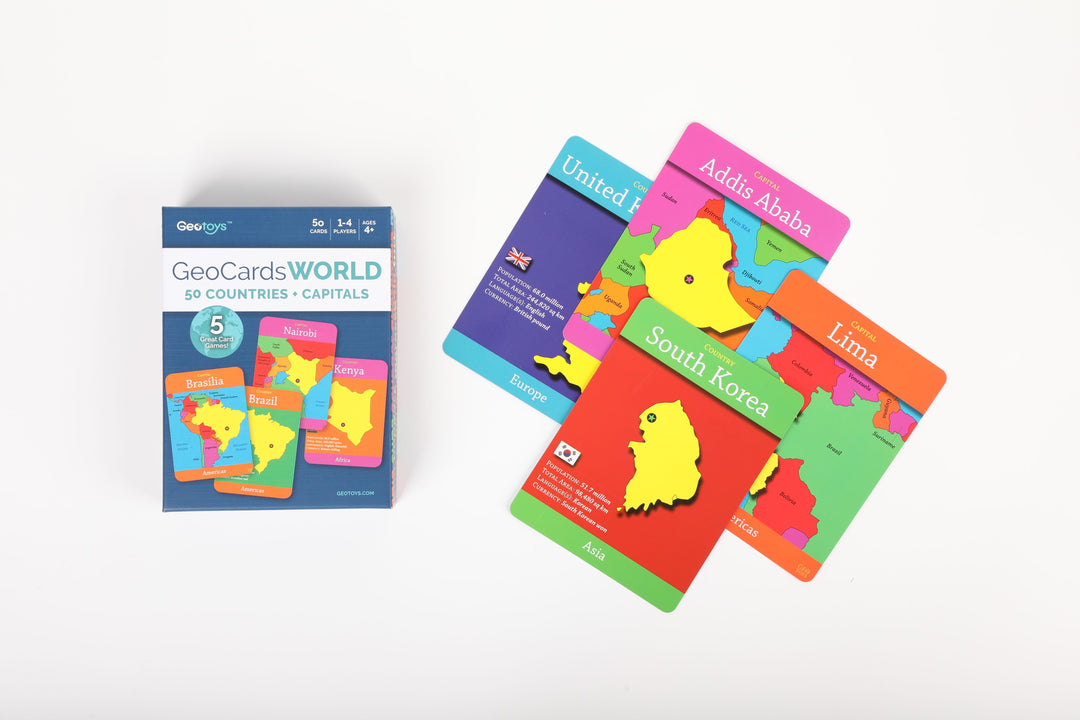
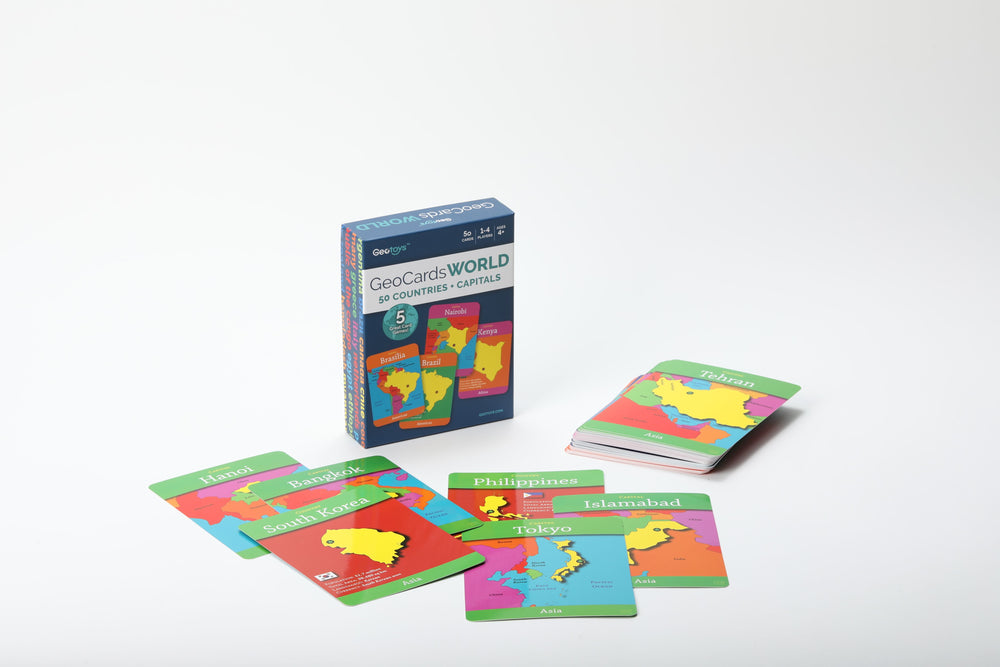
For our GeoCards World Complete Edition deck, our goal was to reflect the world as most people experience and understand it. We eventually landed on 196 countries. Here's how we got there.
Starting with the UN
The most widely recognized benchmark for statehood is membership in the United Nations. There are currently 193 UN member states, spanning every continent and representing the vast majority of the world's recognized nations. Following its independence from Sudan, South Sudan became the most recent country to gain UN country status on July 14, 2011. For most of our cards, UN membership was the baseline.
UN recognized nations include:
A |
||
|
|
 |
B |
||
|
|
 |
C |
||
|
|
 |
D |
||
|
|
 |
E |
||
|
|
 |
F |
||
|
 |
|
G |
||
|
|
 |
H |
||
|
|
 |
I |
||
|
|
 |
J |
||
|
 |
|
K |
||
|
|
 |
L |
||
|
|
 |
M |
||
|
|
 |
N |
||
|
|
 |
O |
||
|
 |
|
P |
||
|
|
 |
Q |
||
|
 
|
|
R |
||
|
|
 |
S |
||
|
|
 |
T |
||
|
|
 |
U |
||
|
|
 |
V |
||
|
 |
|
Y |
||
|
 |
|
Z |
||
|
 |
|
* Non-member Observer States (Holy See, Palestine) and partially recognized state (Kosovo) included beyond the 193 UN member baseline.
Going Beyond Full Membership
Full UN membership isn't the only marker of recognized statehood. The UN also designates a category called “Non-member Observer States.” These are entities that have been granted permanent observer status by the General Assembly: this gives them the ability to participate in UN proceedings without holding full voting privileges. Currently, two territories hold this status: the Holy See (Vatican City) and the State of Palestine. Both are recognized as states by a significant portion of the international community, and both are included in our deck.
That brings us to 195. The remaining entry reflects a territory with a well-established, distinct national identity and broad international recognition even outside the formal UN framework — which is Kosovo.
Why We Landed on 196
Kosovo does not have any formal UN classification as a state. It is not a member of the United Nations, but Kosovo declared independence from Serbia on February 17, 2008, while still being denied UN membership because Serbia continues to claim Kosovo as its own.
Unlike Palestine and Vatican City, Kosovo doesn't hold Non-member Observer State status. It simply exists outside the UN framework entirely, as a partially recognized state. As of late 2025, around 110 out of 193 UN member states have recognized Kosovo. Because of this majority we decided to include Kosovo on our deck.
Geography is a living thing. Borders shift, names change, and questions arise that have no easy answers. We'll revisit these decisions with every new edition of our products, and we welcome the conversation. If you have thoughts on our choices — whether you agree, disagree, or simply want to share a perspective we may not have considered — we'd love to hear from you.





Leave a comment